Search
Close X





News
Professor Wang Ying Co-Chairs Launch of UN GEO-7 Report: Focusing on Systemic Solutions for Sustainable Development
Published:11/12/2025
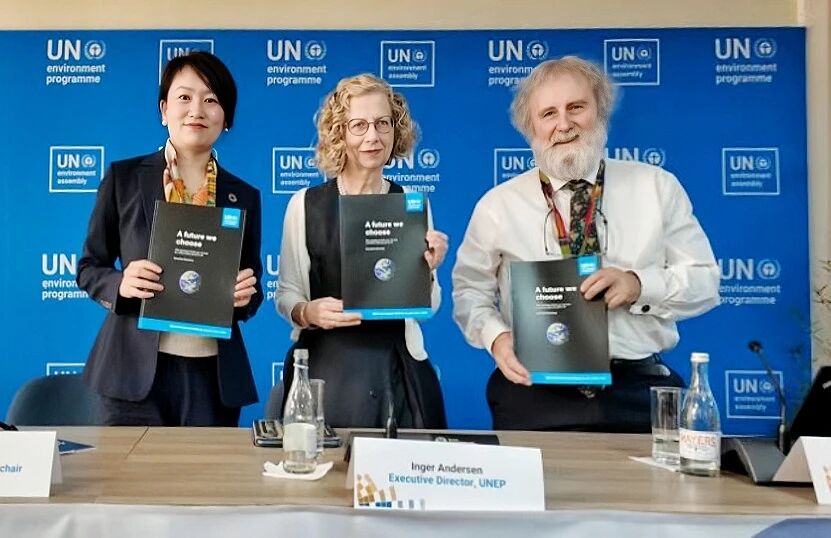
Nairobi, Kenya, December 9 (Local Time) – The launch ceremony for the seventh Global Environment Outlook (GEO-7) report was held prominently during the seventh session of the United Nations Environment Assembly (UNEA-7). Professor Wang Ying from IESD at Tongji University, serving as one of the GEO-7 Co-Chairs, presided over the ceremony alongside Inger Andersen, UN Under-Secretary-General and Executive Director of the UN Environment Programme (UNEP), and Sir Bob Watson, Chief Scientific Adviser of the UK's Department for Environment and GEO-7 Global Vice-Chair. Together with the Intergovernmental and Multi-stakeholder Advisory Panel and the Multidisciplinary Expert Group, they unveiled this latest authoritative global environmental assessment.
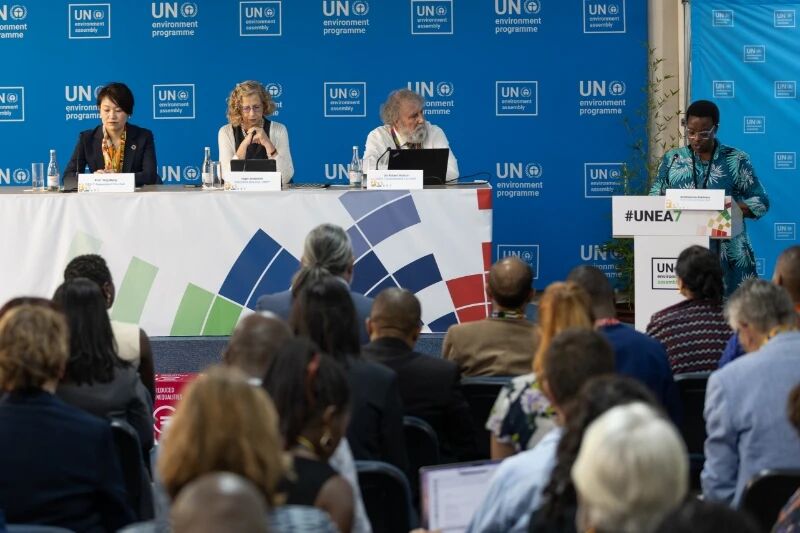
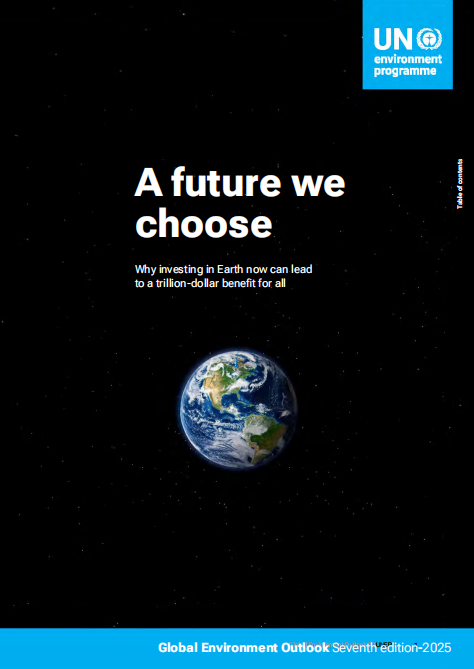
As UNEP’s most influential flagship publication, the Global Environment Outlook has been published seven times since its inaugural edition in 1995 and is widely regarded as the “scientific compass” for global environmental governance. Departing from previous editions that primarily assessed environmental conditions and trends, GEO-7 marks a historic shift by placing solutions at its core. It addresses the triple planetary crisis—climate change, biodiversity loss, and pollution—and proposes actionable policy pathways and technological strategies. Drawing on peer-reviewed data, modeling analyses, and real-world case studies across six global regions—Africa, Asia and the Pacific, Latin America and the Caribbean, North America, Europe, and West Asia—the report provides robust scientific support for national environmental policymaking and advances humanity toward a sustainable future.
At the launch event, Professor Wang delivered a keynote address outlining the report’s central messages. She emphasized that the world is confronting unprecedented environmental challenges that directly threaten the stability of socioeconomic systems and the resilience of natural ecosystems. She stressed that development must be guided by the principle of “harmony between humanity and nature,” with “green, low-carbon, and circular” approaches serving as key pillars of systemic transformation. Professor Wang called for enhanced international cooperation through cross-regional and cross-sectoral collaboration to accelerate the implementation of the 2030 Agenda for Sustainable Development.Her remarks effectively integrated China’s green development philosophy with global governance perspectives, receiving strong resonance from representatives of international organizations and experts in attendance.
As a highlight of UNEA-7, the launch attracted senior government officials, leaders of international institutions, and top scientific teams from around the world. Professor Wang’s role as Co-Chair underscores the growing influence of Chinese scholars in shaping the global environmental agenda and highlights Tongji University’s longstanding academic strengths in pollution control, climate change mitigation, and green, low-carbon transition.Through deep involvement in the GEO-7 process, Tongji University has successfully embedded its research findings, governance practices, and policy recommendations into the global environmental governance framework, contributing distinctively “Chinese wisdom” and “Tongji strength” to addressing the triple planetary crisis.
It is reported that the GEO-7 report has already become a widely referenced scientific resource for policymakers worldwide. Its systemic solutions are expected to play a pivotal role in strengthening international cooperation, enhancing environmental governance capacity, and advancing the realization of the Sustainable Development Goals.