Search
Close X





News
Tongji University Student Delegation Attends the 7th United Nations Environment Assembly
Published:13/12/2025
The 7th United Nations Environment Assembly (UNEA-7) was held in Nairobi, Kenya, from December 8 to 12, 2025. As the highest-level multilateral platform for environmental governance within the UN system, this year’s assembly centered on the theme “Advancing Sustainable Solutions for a Resilient Planet.” It brought together over 6,000 people from 186 countries to engage in in-depth discussions on critical issues such as climate change mitigation, biodiversity conservation, and pollution and waste management. The assembly concluded with substantial outcomes, adopting 11 resolutions, 3 decisions, and 1 Ministerial Declaration.
Engaging university students in UNEA is a vital practice for cultivating their international competence. By directly experiencing the operational dynamics of a premier global governance forum, students observe how nations negotiate positions and build consensus on environmental issues. This exposure helps them develop a holistic understanding of global environmental governance, while bridging classroom-based theoretical knowledge with cutting-edge international practices—thereby transforming academic learning into practical, globally relevant skills essential for future careers in transnational environmental research and policymaking.
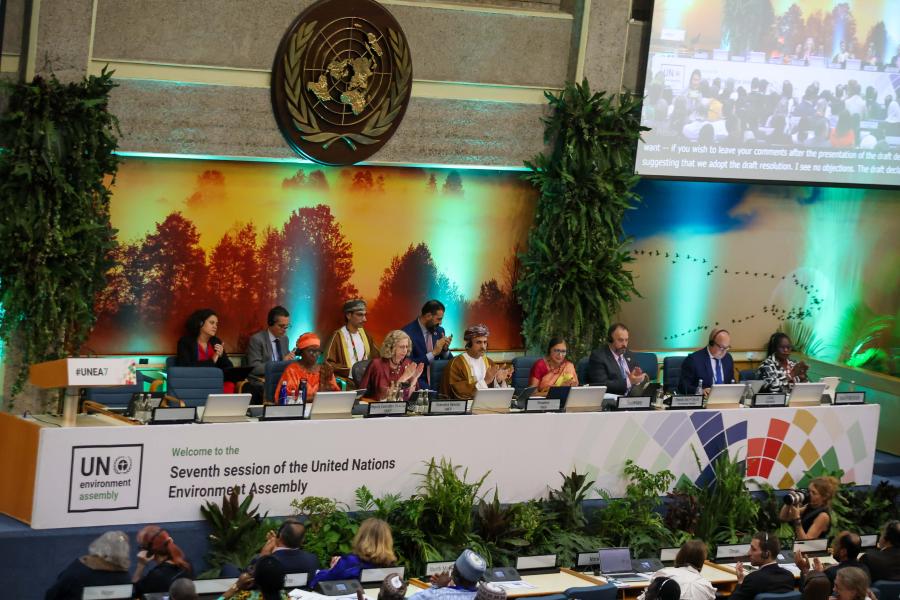
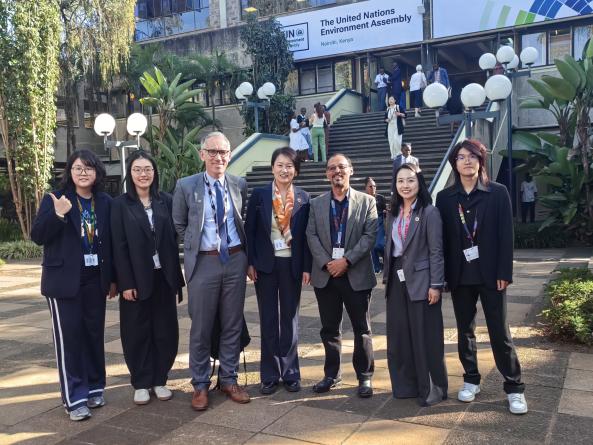
Under the leadership of Professor Wang Ying, IESD actively responded to and implemented Tongji University’s strategic initiative to empower disciplinary development through “digital intelligence, green transformation, and integration.” IESD also earnestly advanced President Xi Jinping’s vision for global governance—particularly the principle of extensive consultation, joint contribution, and shared benefits—and put into practice the concept of building a community with a shared future for humanity. In this spirit, IESD organized a delegation of four student observers from the College of Environmental Science and Engineering, the College of Electronics and Information Engineering, and other schools to participate in the “Tongji Global Initiative for Sustainable Development” by attending UNEA-7 in Nairobi.
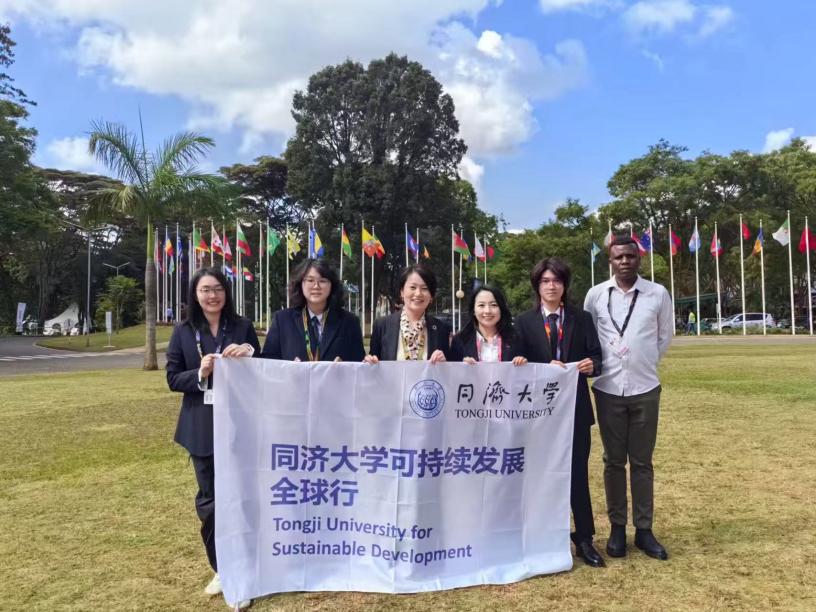
Throughout the assembly, the student delegation actively engaged in multiple key sessions and held in-depth exchanges with numerous UN experts. Through these experiences, they broadened their international perspectives, enhanced their professional competencies, and strengthened their capacity to contribute meaningfully to global sustainability and governance.During the conference, the student observers participated in thematic sessions on artificial intelligence and environmental protection, responses to glacial retreat, global seaweed bloom management, biodiversity conservation, and green finance, gaining systematic insights into frontier issues and governance practices worldwide. They also had warm and encouraging conversations with Ms. Guo Fang, Vice Minister of China’s Ministry of Ecology and Environment, the Chinese Ambassador to Kenya, and the Kenyan Ambassador to China. These officials highly commended the Tongji students for their proactive engagement in global sustainability and environmental governance, praising their solid expertise and open-minded global outlook. They encouraged the students to continue deepening their research and involvement in environmental science and international governance, contributing youthful wisdom and fresh energy to national strategies, China-Africa environmental cooperation, and the advancement of the global environmental agenda.
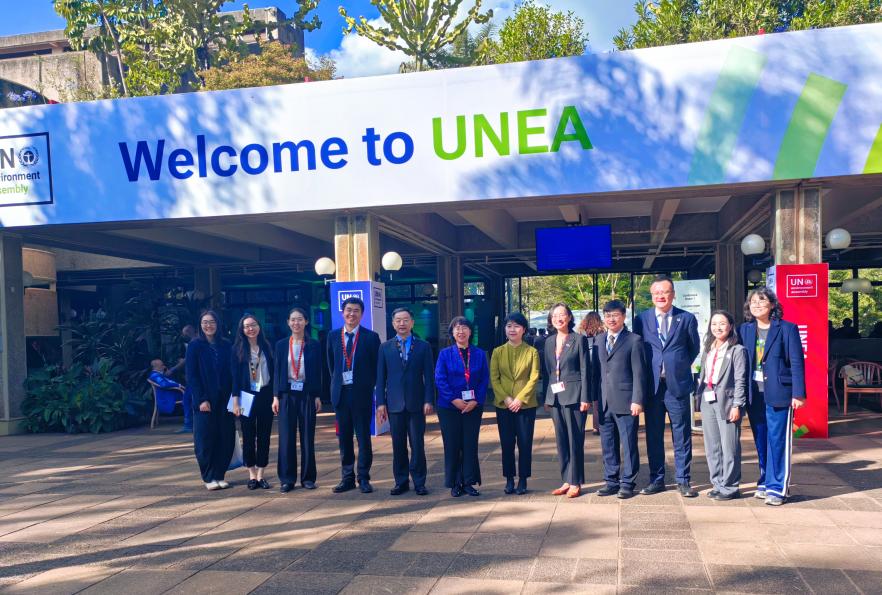
Moreover, the students held face-to-face dialogues with UNEP officials, government delegates from multiple countries, environmental scientists, policy researchers, and representatives of multilateral environmental agreements. In various youth forums and side events, the Tongji delegation joined young peers from around the world to discuss emerging trends and challenges in environmental governance. They actively contributed to scientific-policy-business forums and panel discussions, demonstrating Tongji youth’s sense of responsibility and expansive global vision in advancing global ecological civilization.
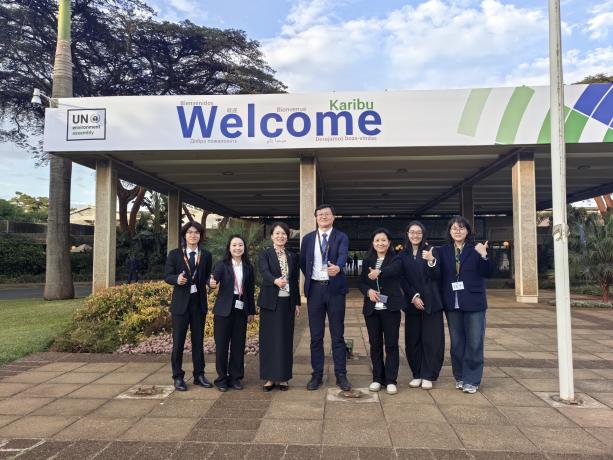
Since the establishment of the Institute for Environment and Sustainable Development (IESD) through the partnership between UNEP and Tongji University in 2002, the institute has evolved into a key platform for promoting UN-led education for sustainable development and stands as a flagship initiative showcasing Tongji’s commitment to sustainability and international collaboration. Over the years, faculty and students have consistently participated in major UN conferences and international mechanisms, voicing informed perspectives on climate change, ecological governance, sustainable urban development, and digital technology-enabled solutions through policy briefings, youth dialogues, field research, and other formats—yielding internationally recognized research outputs and policy recommendations.
At this year’s UNEA, Tongji faculty and students further deepened their engagement and cooperation, vividly embodying the university’s tradition of excellence, global awareness, and forward-looking responsibility. Their active presence powerfully illustrated the role of Tongji youth in the global sustainability movement and highlighted the commitment and leadership of Chinese universities in global environmental governance and sustainable development.