Search
Close X





News
American National Academy of Engineering Member Professor Bruce E. Rittmann Visits College of Environmental Science and Engineering and Delivers Academic Lecture
Published:24/04/2026
On April 17, 2026, Professor Bruce E. Rittmann, Member of the U.S. National Academy of Engineering, Fellow of the American Association for the Advancement of Science, Regents’ Professor of Arizona State University, and Honorary Professor of the College of Environmental Science and Engineering at Tongji University, visited the college and delivered an academic lecture titled “Recovering Valuable Metals from Mine and Ore-processing Wastewaters” as part of the Tongji Advanced Environmental Forum. The lecture was chaired by Professor Sun Jing, Vice Dean of the College of Environmental Science and Engineering and Vice Dean of the UNEP-Tongji Institute of Environment for Sustainable Development. More than 100 faculty and students, including Professor Xia Siqing, Professor Wang Rongchang, Professor Long Min, and Associate Professor Li Tian, attended the event.
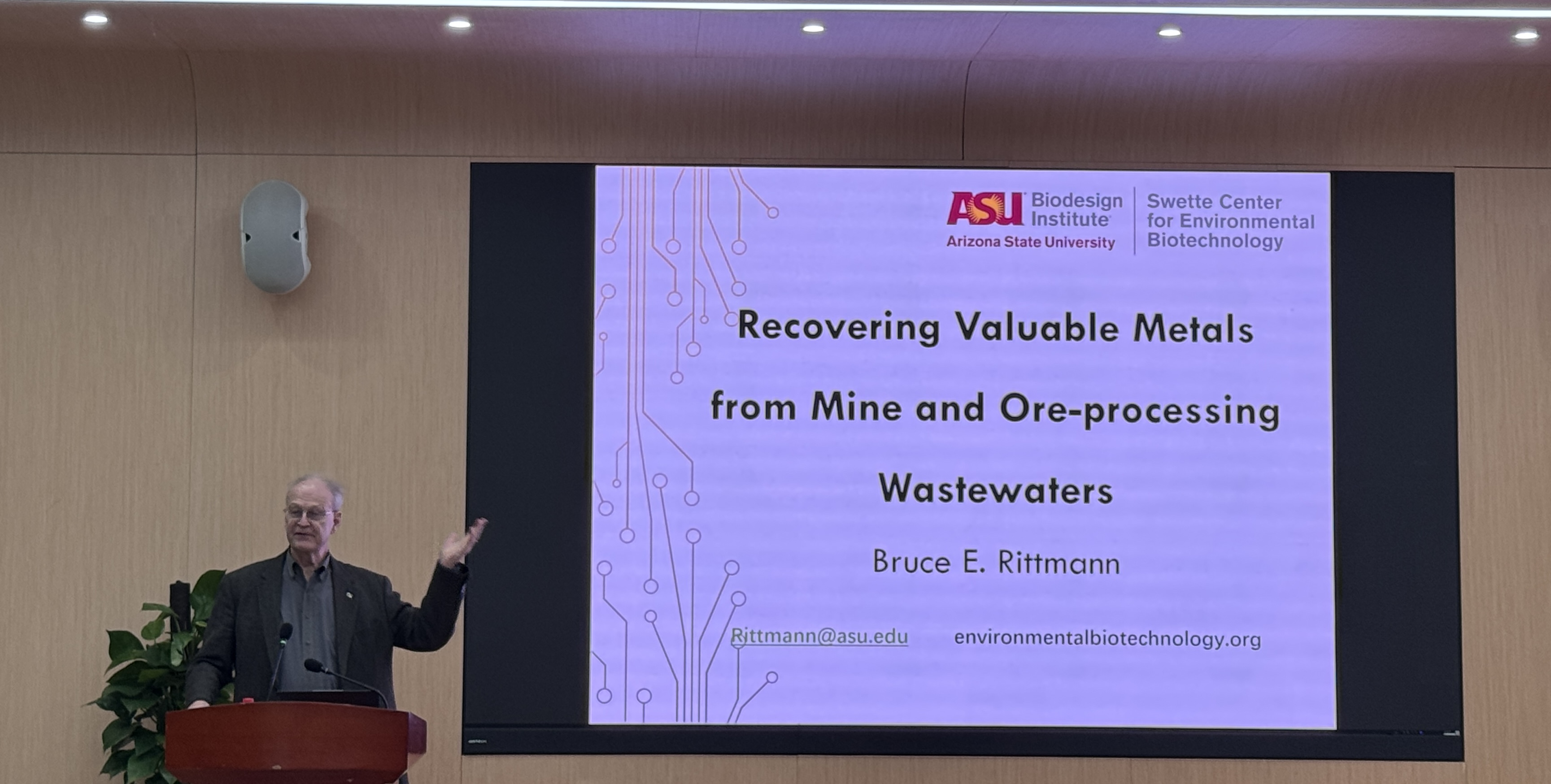
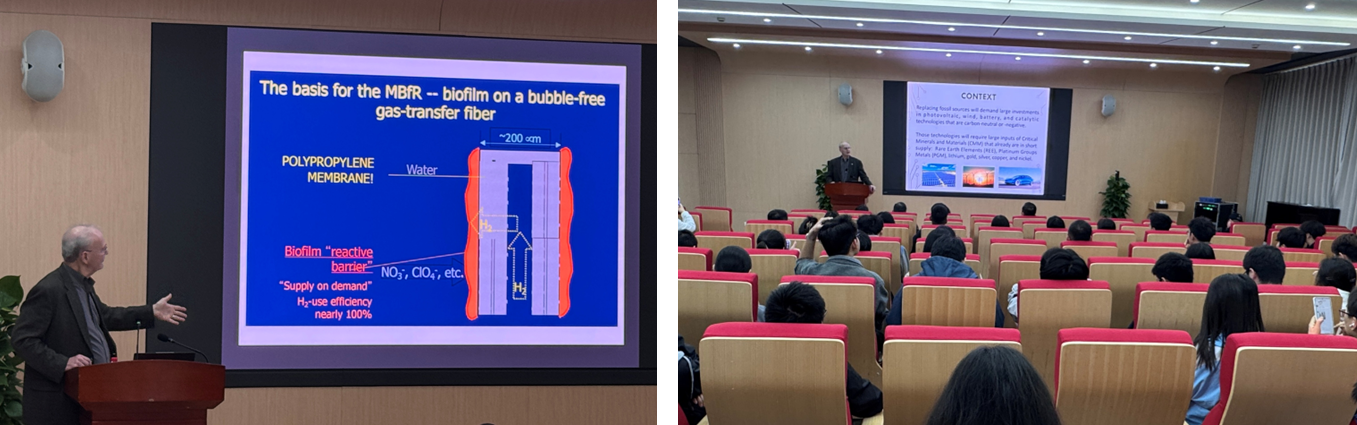
Professor Rittmann systematically introduced the fundamental principles and technical framework of the hydrogen-based membrane biofilm reactor (MBfR) and explained how the bubble-free hydrogen supply in the MBfR provides precisely controllable reducing power to microorganisms, enabling the targeted reduction of precious metal ions such as platinum and gold in wastewater into nanoparticles. Drawing on years of accumulated research from his team, Professor Rittmann further elucidated the coupled biological and chemical mechanisms of nanoparticle formation in the MBfR, detailing the differential characteristics and regulatory principles of microbial communities, electron transfer pathways, and nanoparticle crystals under different metal systems. He demonstrated the feasibility and stability of this technology for efficient metal recovery from various complex wastewater streams, offering a new paradigm for the treatment of metal-industrial wastewater and the recovery of precious metal resources.
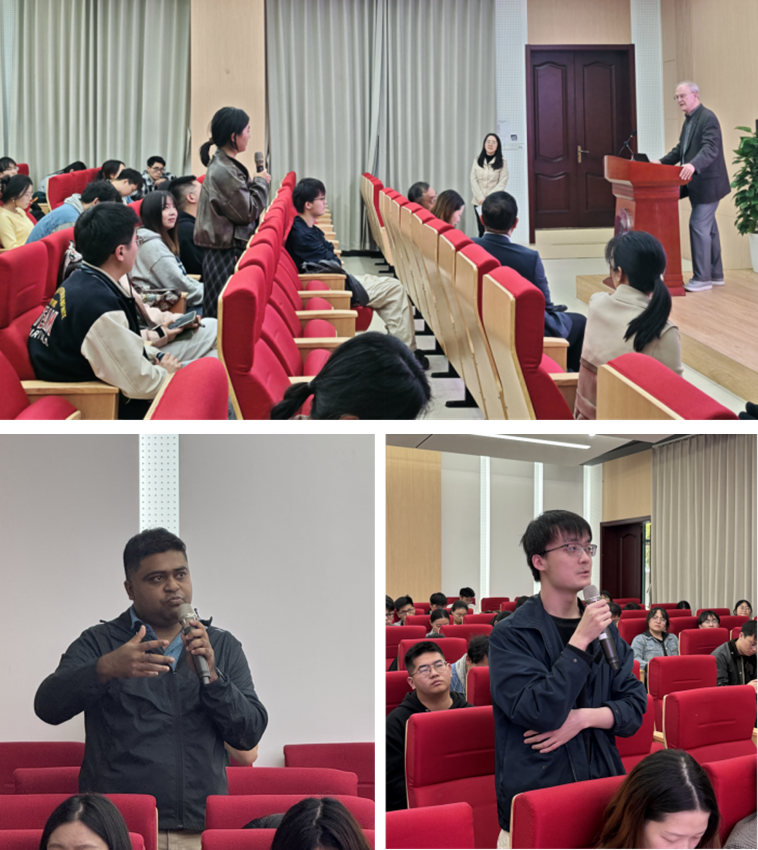
During the interactive session, faculty and students engaged in in-depth discussions with Professor Rittmann on topics such as recovery efficiency of precious metals, targeted regulation of microbial functions, and engineering challenges of environmental biotechnology. The lecture profoundly illustrated the concept of synergizing environmental pollution control with high-value resource recovery, broadened the academic horizons and cutting-edge understanding of students and faculty in the field of environmental biotechnology, and provided international, forward-looking academic guidance for talent cultivation in the environmental field.