Search





- GESC 2026
- ISCES 2026
- Background
- Guests
- Partners
- Past Events
1. Information
Host: Tongji University
Organizer: UNEP-Tongji Institute of Environment for Sustainable Development
Special Support: Agriculture Bank of China
Time: From now until early June 2026, the semifinals and finals will be held in Shanghai from June 10 to 12, 2026
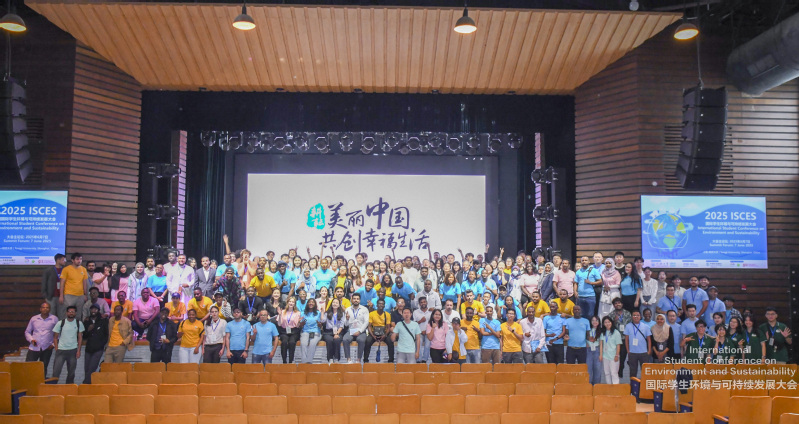
Venue: The first round is online, the semi-finals and final will be held during the 15th International Student Conference on Environment and Sustainability(ISCES 2026) in Shanghai, China.
2. Topics
World Environment Day 2026 will rally the world around the urgency of climate action. With rising temperatures, collapsing ecosystems, and disruptive weather extremes, humanity stands at a tipping point. But we are not powerless. “Climate Action” aims to address the climate crisis, foster a sustainable and resilient future, and tackle environmental degradation. It is not only about reducing carbon emissions, but also about restructuring the systems that underpin our economic development and repairing our relationship between humanity and the climate. By doing so, we can secure a safer, healthier, and more equitable future for all.
The theme of the 6th Global Environment Solutions Challenge is “Climate Action”. We invite young students worldwide to participate and work together to address the challenges of climate change, to ensure climate action is effectively rooted in national contexts and local realities.
The challenge this year offers four topics:
Topic 1: Climate-Resilient Energy System
At present, the pressure of energy structure transformation and climate adaptation is superimposed. Against the backdrop of climate change, the basic energy facilities of cities and communities are facing multiple risks such as extreme high temperatures, heavy rainfall, floods, and sea level rise. Meanwhile, the energy system is accelerating its transformation from high-carbon to clean, low-carbon and sustainable. For instance, the Qinghai-Tibet Plateau in China is accelerating the construction of hydropower-solar-wind complementary bases, but the large-scale development of new energy also faces climate adaptability challenges. This topic encourages participants to propose solutions that can enhance the climate adaptability and resilience of the energy system under the premise of ensuring energy security, explore innovative paths for the coordinated advancement of clean energy development, energy system dispatching and climate risk management, and enhance the resilience of the energy system to climate change.
Potential directions (including but not limited to):
Focusing on various energy operation scenarios such as hydropower, wind power, and solar power, explore system design and optimization solutions to enhance the stability and reliability of energy systems under climate fluctuations and extreme events.
Centering on climate risks such as high temperatures, heavy rainfall, floods, and cold waves, analyze their impact mechanisms on energy infrastructure and power supply systems, and propose response strategies to reduce operational risks and ensure continuous power supply.
Considering the significant influence of climate conditions on new energy sources, explore means such as energy storage configuration, system dispatch, or structural optimization to enhance the energy system's regulatory capacity and resilience against uncertain shocks.
Design energy solutions that integrate emission reduction goals and climate adaptation needs at the regional, community, or campus level, and explore low-carbon and resilient development models with replicability and promotion potential.
Topic 2: Climate-Resilient Cities
Cities are the main gathering places for human production and life, and also the areas where various elements, resources and economic and social activities are most concentrated. The superimposition of regional climate change trends and urban climate effects makes the adverse impacts and risks that cities suffer even more severe. Building climate-resilient cities with the goal of preventing climate risks can minimize the adverse impacts and risks of climate change to the greatest extent. This topic encourages participants to work on urban climate system observation and assessment, optimization of urban spatial layout, construction of emergency transportation networks, the synergy between green finance policies and urban construction, etc., to improve the ability of cities to adapt to climate change, thereby enhancing the competitiveness and sustainable development potential of cities.
Potential directions (including but not limited to):
Improve the observation network for climate elements such as temperature, rainfall and waterlogging, and establish a city climate risk assessment system. Enhance the early warning capacity for extreme climate events in cities and the scientific decision-making support level.
By optimizing the urban spatial structure and functional layout, strengthening the construction of sustainable infrastructure, and improving the layout of ventilation corridors, etc., enhance the buffering and adaptive capacity of cities to climate risks.
Through strengthening the resilient design of key infrastructure such as transportation systems, water supply, drainage systems, power and communication systems, improve their safety and continuous operation capabilities under extreme climate conditions.
Promote the green upgrade of infrastructure, develop green buildings, ultra-low energy consumption buildings, etc., explore green financial tools to support the construction of climate-adaptive projects, and form a long-term promotion mechanism combining policy guidance and market-driven forces.
Topic 3: Climate Change and Biodiversity
Biodiversity provides humans with a rich array of necessities such as food, medicine, fuel, and a large number of industrial raw materials for survival and development. Protecting biodiversity is conducive to ecological balance and offers a guarantee for sustainable human development. Currently, climate change has affected the integrity of ecosystems, altered phenological periods, and caused ecological imbalances among species, posing a serious threat to biodiversity and even accelerating species extinction. This topic encourages participants to propose solutions in areas such as habitat monitoring for species, intelligent species identification, and remote sensing technology investigation, to promote the practice of biodiversity conservation and enhance the adaptability of ecosystems to climate change.
Potential directions (including but not limited to):
Design monitoring plans for small-scale habitats such as campuses, parks or wetlands based on the local ecological environment. Use methods such as field investigation and continuous observation to form complete monitoring reports or analysis models, providing practical reference paths for habitat management and protection.
Develop identification and quantification plans for wild species based on infrared monitoring, acoustic sensor capture, etc. Assess the impact of climate change on the survival status of species, identify potential risks, and provide a basis for formulating scientific and effective biodiversity protection measures.
Combine unmanned aerial vehicles, satellite remote sensing and other means to design dynamic monitoring and spatial analysis plans for habitats, grasp the spatial distribution, fragmentation degree and structural evolution trend of forest, grassland, wetland and other ecosystems, and provide support for habitat restoration.
Based on local ecological characteristics and species status, propose specific and implementable biodiversity protection measures, such as habitat restoration, micro-habitat creation, species-guided recovery, and public participation mechanisms, to form a comprehensive protection plan with practical feasibility and promotion value.
Topic 4: AI & Climate Action
The challenges of emission reduction and adaptation brought about by climate change are becoming increasingly complex, and there is an urgent need to leverage artificial intelligence to enhance the efficiency of observation, analysis, and decision-making. Currently, artificial intelligence technology is in a stage of rapid development, demonstrating great potential to empower climate actions while also presenting multiple risks and challenges such as data bias, model flaws, and insufficient explainability of prediction results. This topic encourages participants to apply technologies such as machine learning, big data analysis, remote sensing, the Internet of Things, and digital twins to design AI-enabled climate action solutions that can be truly integrated into cities, communities, or campuses, focusing on different scenarios such as carbon emission monitoring, extreme weather warning, climate risk assessment, and public behavior guidance.
Potential directions (including but not limited to):
At the scale of cities, parks or campuses, explore methods for carbon emission monitoring, accounting and trend analysis based on artificial intelligence to support decision-making for emission reduction and performance evaluation.
Focusing on typical climate risks such as high temperatures, heavy rain, urban flooding and drought, build intelligent identification and early warning schemes to enhance the climate risk perception and response capabilities of cities and communities.
Utilize data analysis and intelligent decision-making tools to guide the public to form low-carbon behaviors in travel, energy use and consumption, promoting the transformation of climate governance from policy-driven to social collaboration.
Present climate change and response paths in an intuitive way through digital twins, visualization or intelligent interaction methods, serving climate education and communication in campuses, communities and among the public.
Participants can choose the topic they are interested in and form a team to register for the challenge.
3. Target Participants
This challenge is open to the whole world, regardless of age and nationality, and students studying in higher education institutions can participate.
4. How to Participate
There are two ways to get involved in this challenge.
Register as an [Participant] to compete for contest honors and generous scholarships. The Challenge is open to groups only. Participants are required to form their own teams before completing the registration process.
Register as an [Observer], who can vote for supported teams and apply to come to the final as a spectator.
4.1. Registration as a Participant
Qualification:
- Participants need to form their own teams, with each team including consisting of 2-4 members.
- Participants should ensure that the registration information is accurate and valid. If the information of any participant in a team does not meet the requirements, the organizing committee has the right to cancel the registration and the reward of the whole team.
Registration Method:
Team leaders register in the official registration system first, then the system automatically generates an invitation link, which the team leader needs to send to the team members. Team members will then have to click the invitation link to complete the registration process within 3 days or the registration will be regarded as unsuccessful. The team leader can check the progress of team member registration on the personal page of the system.
4.2. Registration as an Observer
Qualification: Anyone interested in environmental issues can register as observer.
Time: After registering as an observer, log in to the registration system from 17:00 on May 15 to 00:00 on June 12 (UTC+8), 2026, to cast your vote for the most popular group.
4.3. Registration deadline
For participants: April 24, 2026 (UTC+8)
For observers: 00:00, June 12, 2026 (UTC+8)
4.4. Registration website
Official registration system: https://isces.tongji.edu.cn/
Participants and observers need to register on this website.
5. Timeline
March 12, 2026: Registration opens.
April 24, 2026: Register in the system, confirm team, and submit solution.
May 8, 2026: The Challenge Organizing committee will announce the list of teams that enter the semi-finals. The teams need to inform the organizing committee by email whether they can participate offline (at least 1 team representative). If none of them can participate offline, they will be deemed to have given up;
May 15, 2026: The organizing committee will announce the list of teams shortlisted for the offline semi-finals on the IESD website and open voting for the most popular award until 00:00,June 12;
June 10-12 2026: Semi-finals, Final and Awarding Ceremony.
6. Submission Requirements
6.1. Format Requirements
The work must be presented in the form of a poster.
The aspect ratio of the poster must be 2:1 (Landscape).
The submitted file format is PDF, with a resolution of not less than 300 dpi.
6.2. Language Requirements
English.
6.3. Design Requirements
The poster has to clearly present the content and innovative points of the submitted solution.
The design of the poster should be clear, concise and visually appealing. All text should be in easy-to-read fonts, and the layout should be reasonable to avoid congestion and confusion.
6.4. Copyright Notice
The submitted work should be original and does not infringe the copyright of any third party. If you use other people's material, you need to indicate the source.
7. Judging Criteria
Each group of topics will have 3-4 judges, consisting of experts from international organizations, enterprises and non-profit organizations, the list of which will be published in advance on the Conference website. The judges will observe the principle of fairness in scoring each group, and the actual score of each group will be the average score of the judges.
8. Award Setting
8.1. There generates ONE Champion Team, TWO Second Prize teams and THREE Third Prize teams, which will be selected by the judging committee.
The Champion Team will get 15000 RMB (before tax).
The Second Prize team will get 9000 RMB (before tax).
The Third Prize team will get 6000 RMB (before tax).
The Most Popular Team will get 3000 RMB (before tax).
The reward will be distributed directly to the team leader of the winning team, and then distributed among team members themselves.
8.2. Semi-finalist groups will be invited to Tongji University. Shortlisted teams can apply for a travel subsidy to cover round-trip transportation and accommodation (excluding meals, visas, insurance, and other expenses). The subsidy for teams from within China is up to 3,000 RMB (covering economy class/second-class tickets + hotel), and for international teams, it is up to 10,000 RMB (covering economy class tickets + hotel).
9. Intellectual Property Rights
The content of the submitted work/poster must be original and should not have been published in any forms before, such as in newspapers, magazines, or on websites. Plagiarism in any form will result in disqualification. Relevant prizes and rewards will be recalled, and the team shall assume all legal responsibilities.
10. Committee Statement
To ensure a smooth and fair progress of the whole challenge, and to guarantee the legitimate rights and interests of the participants, the participants should read and confirm the entry agreement on the official website and conscientiously abide by the provisions of the guideline.
During the challenge, there may be some changes and adjustments, all content is subject to the official website of the challenge.
The Committee of the International Student Conference on Environment and Sustainability (ISCES) and Global Environment Solutions Challenge (GESC) reserves the right of final interpretation of this challenge.
SPECIAL NOTE: ISCES DOES NOT CHARGE A FEE AT ANY STAGE. PARTICIPANTS SHOULD BE AWARE OF FRAUD.